XPeng Level 4 Autonomy: EV Innovation Leaps Forward
XPeng aims to leapfrog to Level 4 autonomy, shaking up the EV landscape. Discover their ambitious plans and the future of self-driving cars.
XPeng Aims to Leapfrog to Level 4 Autonomy, Shaking Up the EV Landscape
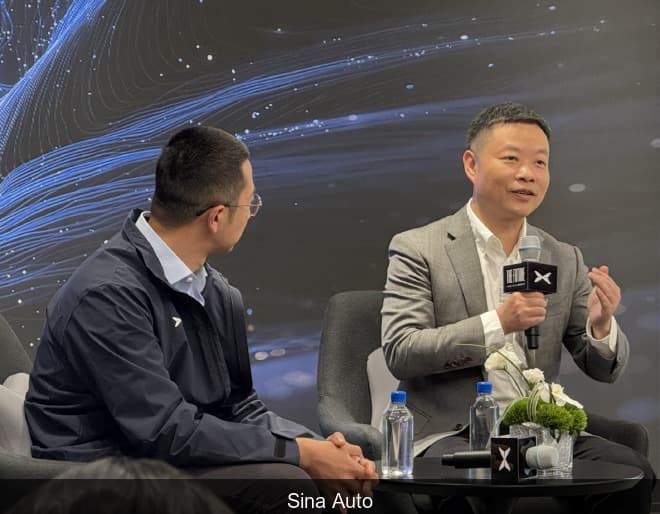
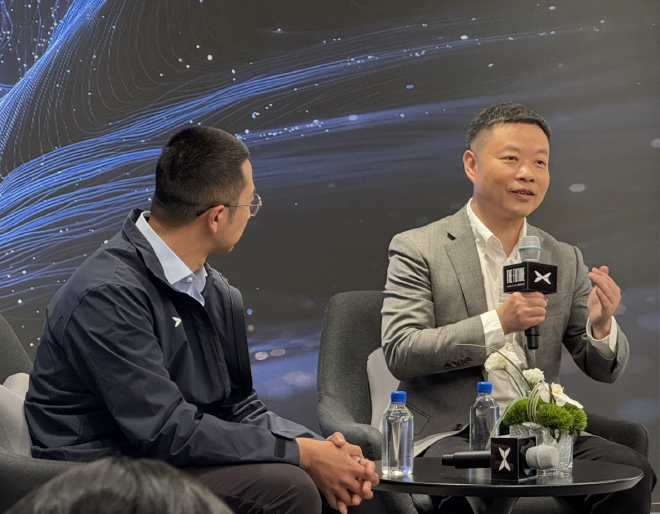
Chinese cars are rapidly evolving, and XPeng is positioning itself at the forefront of autonomous driving technology, aiming to skip Level 3 and jump directly to Level 4 autonomy. According to a recent media briefing following XPeng's second-generation VLA (Vision Language Architecture) media experience, founder He Xiaopeng and General Intelligence Center head Liu Xianming outlined their ambitious plans, focusing on a "physical world large model" approach. This bold strategy could redefine the future of driving, potentially leaving competitors like Tesla, and even established players like BMW and Mercedes-Benz, playing catch-up.
XPeng's L4 Ambitions: A Bold Move
XPeng believes the industry should move directly from Level 2 to Level 4 autonomy, bypassing the complexities and regulatory hurdles of Level 3. He Xiaopeng articulated this vision, stating that L3 presents significant challenges across hardware, software, and legal frameworks. He believes China, and indeed the global market, should focus on L2 and L4, with L4 having a clearly defined responsible entity. This echoes a sentiment that L3, with its conditional automation and handover requirements, creates more problems than it solves.
VLA 2.0: The Foundation for Autonomy
The second-generation VLA is the cornerstone of XPeng's L4 ambitions, building a general and efficient architecture that allows for rapid iteration and improvement. While not yet claiming 100% L4 capability, Liu Xianming emphasized the speed of progress, with new versions released daily. He estimates a "relatively complete L4-level system" could be achieved in the near future, potentially within 1-3 years, contingent on maintaining the current acceleration in training speed and data scale. All future XPeng "Ultra" and "Ultra SE" models globally will offer either basic or top-tier intelligent assisted driving powered by this technology. This is similar to Tesla's Autopilot and Full Self-Driving (FSD) options, but XPeng aims to deliver a more robust and seamless experience.
Own a Chinese car?
We localize multimedia systems, navigation, and voice assistants for BYD, NIO, Chery, Haval and 40+ brands. Your language, your country — fully adapted.
Get a free consultation →Cross-Domain Integration: The Key to Super-Intelligent Vehicles
XPeng is merging its intelligent cockpit and intelligent driving divisions to facilitate cross-domain integration, a trend expected to reshape the automotive industry. He Xiaopeng envisions a future where autonomous driving (vehicle movement), the intelligent cockpit (vehicle brain), power, and chassis are seamlessly integrated. This holistic approach, exemplified by the General Intelligence Center led by Liu Xianming, aims to create faster, safer, and more agile vehicles capable of active service rather than passive use. XPeng believes this integration is crucial for achieving full autonomous driving within 1-3 years, transforming cars into "powerful super-intelligent entities" within 3-5 years. This is a significant departure from the traditional, siloed approach to automotive development.
Navigating the Challenges of Global Expansion
XPeng is addressing the challenges of exporting its autonomous driving technology, particularly concerning data adaptation and localization. The company is using cloud-based models for simulation training and leveraging its global presence to acquire and utilize local data in compliance with regulations. Liu Xianming emphasized that the second-generation VLA model already possesses strong capabilities without requiring extensive overseas data adaptation. XPeng's global autonomous driving strategy combines a model with strong generalization capabilities, a global layout, and ongoing technological breakthroughs. This is crucial to avoid the "acclimatization" issues that Tesla has faced with FSD in different markets.
Thinking of importing a cutting-edge Chinese EV like an XPeng, BYD, NIO, Li Auto, Geely, Chery, or Great Wall? One often-overlooked aspect is localization. You'll want to ensure the multimedia system and menus are fully localized to English for a seamless user experience. This includes installing essential apps like Google Maps, Spotify, and WhatsApp. A local SIM card with unlimited mobile internet is also a must for connected services. Don't forget the voice assistant – having it understand and respond in English is crucial for convenience and safety. And for the ultimate driving experience, consider an AI driving assistant tailored to your local roads and regulations.
Learn more → [https://example.com/en]
The Data Dilemma: Quality Over Quantity
XPeng recognizes the importance of high-quality data for training autonomous driving models, emphasizing that simply accumulating vast amounts of data is insufficient. He Xiaopeng believes that collecting "high-quality, valuable, and ultra-large-scale data" is a significant challenge. Liu Xianming echoed this sentiment, stating that increasing human data alone does not guarantee improved model performance. The focus is on discovering truly useful data in the real world and optimizing the chip, compiler, and model itself to improve efficiency. This approach contrasts with some competitors who prioritize sheer data volume.
Voice assistant in your language
AI-powered voice control that actually understands you. Works offline. Available for 50+ Chinese car models.
See our services →Computing Power: More Than Just Numbers
XPeng believes that effectively utilizing computing power is more important than simply stacking up impressive numbers. Liu Xianming emphasized the transition from general-purpose processors to dedicated processors (ASICs) to optimize computing power usage. Large computing power requires higher information density input and larger models to match, otherwise the computing power will be underutilized. XPeng's full-stack self-development approach allows them to redefine the entire system from the hardware layer to the software and model layers, ensuring it serves their specific application scenarios and on-vehicle deployment model. This coordinated approach is essential for delivering a noticeable improvement in user experience.
XPeng's Competitive Edge: A Five-Fold Advantage?
He Xiaopeng claims XPeng is "nearly 5 times ahead of the industry's top players" in autonomous driving, based on internal comparisons and evaluations. He cites approach rate, reassurance, smoothness, and range of support as key indicators. He believes the number of takeovers (times a driver needs to intervene) will be the most important metric for users to evaluate autonomous driving systems. XPeng aims to achieve seamless autonomous driving in all scenarios, including parking lots, residential areas, toll gates, and main roads. The goal is to create a completely worry-free and highly efficient driving experience, enabling features like automatic charging and autonomous driving after alcohol consumption.
XPeng's current models, like the G9 SUV, offer advanced driver-assistance systems (ADAS) that compete with Tesla's Autopilot and NIO's NAD (NIO Autonomous Driving). The G9, for example, boasts a CLTC range of up to 702 km (436 miles) and a starting price of around $55,000 in China. However, the true test will be the real-world performance of the second-generation VLA and its ability to deliver on XPeng's ambitious L4 goals. If successful, XPeng could significantly disrupt the global automotive market and challenge the dominance of established players.
FAQ
Q: What are the key differences between XPeng's autonomous driving approach and Tesla's?
A: XPeng emphasizes a "physical world large model" approach and cross-domain integration, focusing on high-quality data and efficient computing power utilization. While Tesla relies heavily on vision-based systems and end-to-end neural networks, XPeng is also exploring LiDAR and other sensor technologies. XPeng also stresses the importance of global data adaptation and localization to avoid the "acclimatization" issues faced by Tesla's FSD.
Q: How does XPeng plan to address safety concerns related to autonomous driving?
A: XPeng is prioritizing safety through rigorous testing, simulation, and data analysis. The company is also focusing on developing robust fallback systems and ensuring clear communication between the vehicle and the driver. The emphasis on reducing takeovers and creating a seamless driving experience is also aimed at enhancing safety.
Q: When can we expect to see fully autonomous XPeng vehicles on the roads in the US or UK?
A: While XPeng is aiming for a "relatively complete L4-level system" in the near future, the timeline for deployment in specific markets will depend on regulatory approvals, infrastructure development, and local data adaptation. He Xiaopeng estimates full autonomous driving within 1-3 years, but this is an ambitious target. It's likely that we will see gradual deployment of advanced autonomous features in limited areas before fully autonomous vehicles become widely available.